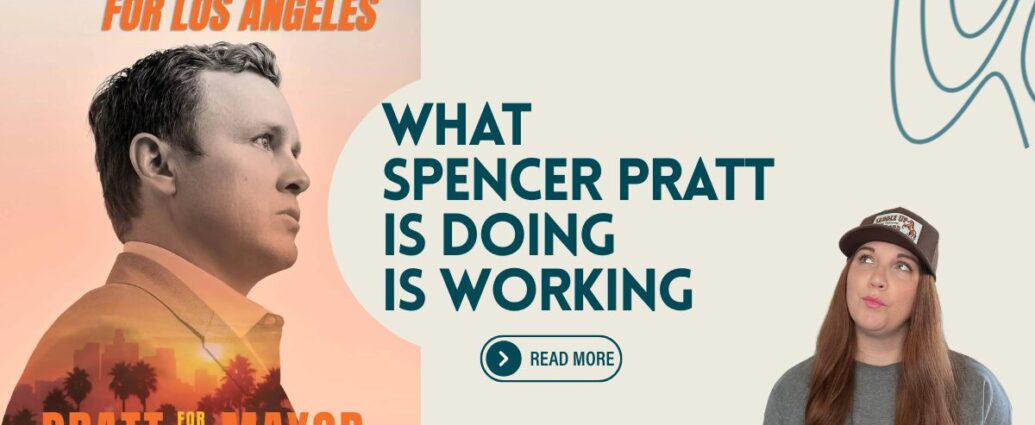
If you had told me a few years ago that one of the most interesting content marketing case studies would come from Spencer Pratt running for mayor of Los Angeles, I probably would have laughed. Yet here we are. Whether you follow politics or not, there is something fascinating happening that every business owner, content creator, and digital marketer should pay attention to. This is what Spencer Pratt’s Mayoral campaign can teach business owners about content marketing.
Why Spencer Pratt’s Mayoral Campaign Is a Content Marketing Case Study
Spencer Pratt is not approaching his campaign the way most politicians do. Instead of relying primarily on polished speeches, formal announcements, and traditional media appearances, he is creating content that feels native to social media. His campaign content looks more like what you would expect from a successful creator than a political candidate. That distinction matters because it highlights a shift that has been happening across every industry. The people who understand how to capture attention online are increasingly influencing conversations, building communities, and growing audiences faster than organizations that rely on traditional communication methods. As business owners, we can learn a lot from this. The goal is not to copy his political views or campaign style. The goal is to understand why his content is resonating and how those same content marketing principles can help us create stronger audience engagement, better brand awareness, and more meaningful connections online.
1. Storytelling as a Core Content Marketing Strategy
One of the biggest reasons Spencer Pratt’s content is working is because he leads with storytelling. In marketing, we often think we need to lead with information. We want to explain our offer, describe our services, and tell people how we can help them. While those things matter, information alone rarely captures attention. Stories do. Spencer has centered much of his content around personal experiences, including challenges he has faced and frustrations he shares with other residents. Rather than positioning himself as someone standing above the audience with all the answers, he positions himself as someone walking through the same problems they are experiencing. This is a powerful content marketing strategy because people naturally connect with stories they can relate to. They see themselves in the narrative. They feel understood. Business owners can apply this same principle to their own content creation efforts. Instead of constantly teaching or selling, consider sharing the journey behind your business, the lessons you have learned, the mistakes you have made, and the challenges you have overcome. Your audience may forget a list of tips, but they are far more likely to remember a story that made them feel something.
2. Problem-Aware Content and Audience Validation
Another reason his content is gaining traction is because he creates what marketers call problem-aware content. Rather than immediately presenting solutions, he spends a significant amount of time highlighting problems that people already care about. This approach works because people engage with content that validates their experiences. Think about your own behavior online. How often do you stop scrolling because someone perfectly describes a challenge you are facing? That moment of recognition creates connection. In social media marketing, one of the biggest mistakes business owners make is jumping straight to the solution without first acknowledging the problem. We create posts about our products, services, or expertise before demonstrating that we understand what our audience is dealing with. Spencer’s content reminds us that people need to feel seen before they are ready to listen. Whether you are a coach, service provider, consultant, realtor, or online educator, your audience wants to know that you understand their frustrations. The more clearly you can articulate the problems they face, the more likely they are to trust the solutions you eventually provide. This principle applies across every industry and remains one of the most effective ways to increase audience engagement.
3. Personality-Driven Content and the Rise of Personal Branding
His campaign also demonstrates the growing power of personality-driven content in the creator economy. One of the reasons people continue to watch his videos is that he has not completely reinvented himself to fit the expectations of a traditional political candidate. He still sounds like Spencer Pratt. His personality, humor, opinions, and communication style remain consistent with what people have known for years. That consistency builds familiarity, and familiarity builds trust. This is an important lesson for business owners who feel pressure to sound more professional online. Often, the content that performs best is not the most polished. It is the most human. Your audience wants to connect with a real person. They want to know who you are, what you believe, and what makes you different. Personal branding has become one of the most valuable assets in digital marketing because people buy from people. They follow creators they trust. They engage with brands that feel relatable. If your content feels overly corporate, overly scripted, or disconnected from your actual personality, you may be creating a barrier between yourself and the very people you hope to serve.
4. From Broadcasting Content to Creating Conversations
Perhaps the biggest takeaway from this entire campaign is that Spencer Pratt is not simply creating campaign content. He is creating conversation. That is an important distinction. Many business owners approach content creation as a way to broadcast information. They focus on what they want to say rather than what people want to discuss. The most successful content marketing strategies today are built around participation. They encourage comments, shares, reactions, and discussions. People do not always share content because they learned something new. Often, they share content because it reflects their identity, validates their beliefs, sparks emotion, or gives them something interesting to talk about. This is why storytelling, personality, and problem-aware content consistently outperform purely informational posts.
What Business Owners Can Learn From This Content Marketing Shift
As business owners, we should be asking ourselves a different question. Instead of asking, “What information should I post today?” we should ask, “What conversation can I start today?” The businesses that win online are not necessarily the ones with the most information. They are the ones that understand how to connect with people. Spencer Pratt’s mayoral campaign is a reminder that in today’s creator-driven world, attention comes before trust, trust comes before action, and meaningful content is what helps build both.
If this breakdown of Spencer Pratt’s mayoral campaign and what it reveals about content marketing and the creator economy resonated with you, this is exactly the kind of clarity I help business owners create.
Most people don’t need more content ideas, they need clearer messaging and a simpler strategy. My Content Clarity Workbook walks you through how to define what you actually want to be known for and create content that connects with the right audience instead of feeling scattered or inconsistent.
And if you want more real-world breakdowns like this, I go deeper on my YouTube channel with practical content strategy you can actually apply across platforms.
You can grab the Content Clarity Workbook and subscribe to my YouTube channel to keep learning how to build content that drives real attention and growth.
Let’s go create something good!
Jess xo