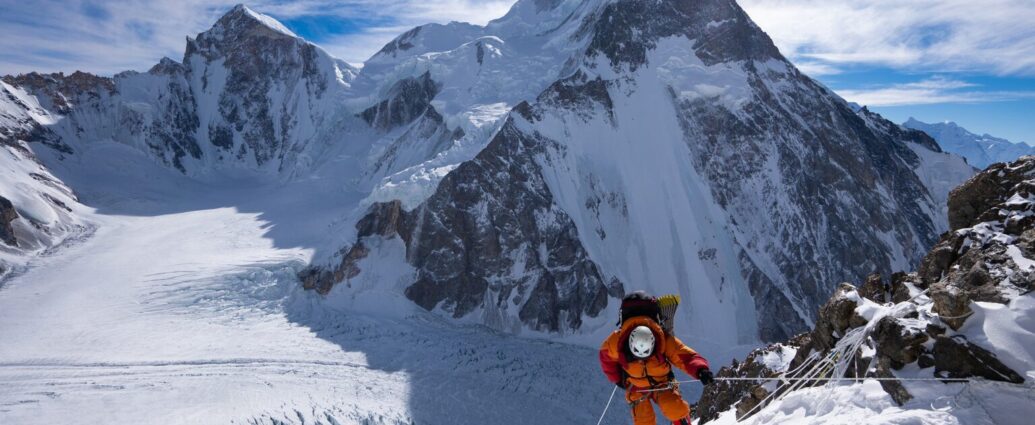
I turned on The Last First: Winter K2 because I love a good documentary, and apparently watching people do terrifying things from the safety of my couch is something I enjoy. I expected a suspenseful story about people attempting to climb one of the most dangerous mountains in the world. I did not expect to finish it thinking about social media.
But I did. And honestly, I felt heavy when it was over.
The Last First: Winter K2, which premiered on Apple TV on October 2, follows several groups of climbers who converged on K2 during the winter of 2020–2021. At the time, K2 was the only one of the world’s 14 mountains over 8,000 meters that had never been summited during winter. The film follows an incredibly complicated season involving elite mountaineers, commercial climbing expeditions, influencer climbers, film crews and people from very different backgrounds chasing the same historic achievement.
People died on that mountain. Families lost people they loved. And I don’t want to reduce any of what happened to a tidy lesson about Instagram because the documentary itself is much more thoughtful than that.
But there was a question underneath the entire film that I haven’t been able to stop thinking about.
What happens when doing something incredible isn’t enough anymore?
The Moment I Can’t Stop Thinking About
There is a moment involving Icelandic mountaineer John Snorri Sigurjónsson that stopped me in my tracks. Snorri talks about reaching the summit of another mountain and being surprised that when he finally got there, he felt essentially nothing.
It wasn’t until he began descending and posted about the accomplishment on Facebook that the emotion arrived. The moment was striking enough that reviews of the documentary have specifically highlighted it while discussing the film’s examination of social media and modern mountaineering.
Think about that for a minute.
You climb an actual mountain. You reach the top. And, you accomplish something most people on Earth will never experience. But somehow, the accomplishment doesn’t fully register until other people can see it.
I don’t say that judgmentally. Actually, I think the reason that moment bothered me so much is because I understood it.
I Think A Lot of Us Understand It
Obviously, I am not comparing posting content on Instagram to climbing K2. My greatest occupational hazard today is probably reheating my coffee too many times. But I’ve been creating things and putting them online for a very long time. And I know what it’s like for the response to something to start changing how I feel about the thing itself.
You make a Reel you think is hilarious. Then it doesn’t perform well, and suddenly maybe it wasn’t that funny. You write something you’re proud of, but nobody reads it. You take a beautiful photograph, share it, and immediately start checking whether anyone else agrees that it’s beautiful.
Somewhere along the way, the experience happens, and then the internet tells us how to feel about the experience.
That’s an uncomfortable thought.
Being Seen Isn’t a Bad Thing
I want to be careful here because I do love the internet.
I genuinely think we’re living in an incredible time in history. A person with an idea can pick up a phone, create something and potentially reach people all over the world. Small business owners can build audiences without enormous advertising budgets, creators can make careers out of skills that might never have had a traditional career path, and people can find communities they may never have found otherwise.
I’ve built a career around this world. I teach people how to become more searchable, create content and use the internet to grow their businesses. I’m certainly not about to argue that we should all delete Instagram and move into the woods.
But something can be incredible and still come with consequences we don’t fully understand yet. And I think The Last First captures an extreme version of that tension.
What Changes When There’s Always an Audience?
The documentary isn’t subtle about the presence of cameras. There were influencers, filmmakers, phones and professional crews documenting what was happening on the mountain, and Bar-Lev has said there were so many cameras on K2 that his team didn’t need to go there to make the film. Much of the footage they eventually worked with had originally been captured in short bursts on phones for social media.
Again, that doesn’t mean cameras caused what happened. The director himself has resisted easy explanations for the tragedy, instead examining commercialization, competition, socioeconomic differences, national pride, risk and the ubiquity of cameras as overlapping parts of a much more complicated story.
But it made me wonder what happens to us when there’s always an audience in the back of our minds. Does documenting an experience eventually change the experience? Does achieving something feel different when we know thousands of people are waiting to see whether we achieve it?
And once people start watching us for doing extraordinary things, how difficult is it to decide that we don’t need to do something even more extraordinary next? I don’t know the answers to those questions.
That’s probably why I keep thinking about them.
Maybe We Need Things That Don’t Perform
As content creators, we’re taught to measure almost everything.
Views. Followers. Watch time. Traffic. Clicks. Shares. Comments. Conversions. There is a number available to tell us how almost everything we create performed.
Those numbers can be incredibly useful. They’re also capable of quietly becoming a scoreboard for things they were never meant to measure. A view count can tell me how many times my video was watched. It cannot tell me whether making that video was worthwhile. Likes can tell me whether people responded to a photograph. They cannot tell me whether the moment I photographed was meaningful. Traffic can tell me whether people found something I wrote. It cannot decide whether I’m proud that I wrote it.
Maybe we need parts of our lives that never become content. Maybe we need things we create simply because we wanted to create them. And maybe sometimes we need to accomplish something and allow the accomplishment itself to be enough.
What The Last First Left Me Thinking About
I don’t think The Last First: Winter K2 is a documentary about the dangers of social media. It’s much more complicated than that, and the people whose lives were lost deserve more compassion than being turned into examples for a marketing lesson.
What I think the documentary does extraordinarily well is ask questions without making the answers easy. It made me think about ambition. Recognition. Competition. Money. Fame. The desire to accomplish something no one else has accomplished and the very human desire for other people to know we did it.
And it made me think about my own tiny corner of the internet. I love being a content creator. I love that we can build audiences, businesses and communities from our laptops. And, I don’t want to become afraid of that opportunity.
I just don’t want the numbers on a screen to become the thing that tells me whether something I experienced, created or accomplished mattered. Maybe that’s the question I’m taking with me from this documentary:
Can the thing still be enough, even if nobody sees it?
I hope so.
I also want to acknowledge the very real loss at the center of this documentary. My heart goes out to the families and loved ones of the climbers who lost their lives on K2. Their stories are so much bigger than any observation I could make about social media or creator culture, and I’m grateful the documentary gave us the opportunity to learn a little about the people behind them.
FAQ
What is The Last First: Winter K2 about?
The Last First: Winter K2 is a documentary directed by Amir Bar-Lev about the historic 2020–2021 winter climbing season on K2. It follows mountaineers including John Snorri Sigurjónsson and Pakistani father-and-son climbers Ali and Sajid Sadpara as multiple teams attempt the last remaining winter first on an 8,000-meter mountain. The film also explores the commercialization and changing culture of extreme mountaineering. Apple
Is The Last First: Winter K2 about social media?
Social media isn’t the documentary’s only focus, but it is an important part of the story. The film shows influencer climbers, film crews, commercial expeditions and the growing pressure to document extreme accomplishments, alongside larger themes of ambition, money, recognition, class and national pride. Apple
Who was John Snorri Sigurjónsson?
John Snorri Sigurjónsson was an Icelandic mountaineer and one of the central climbers featured in The Last First: Winter K2. The documentary follows his attempt to achieve the first winter ascent of K2 alongside Ali and Sajid Sadpara.
Why does The Last First: Winter K2 connect to creator culture?
The documentary raises interesting questions about what happens when extraordinary experiences are also being documented for an audience. For content creators, that can feel surprisingly familiar because social media gives us constant feedback about how our experiences and creations are being received. My review explores that connection without suggesting social media alone explains the decisions or tragedies depicted in the film.
Where can you watch The Last First: Winter K2?
The Last First: Winter K2 premiered globally on Apple TV on October 2, 2026.