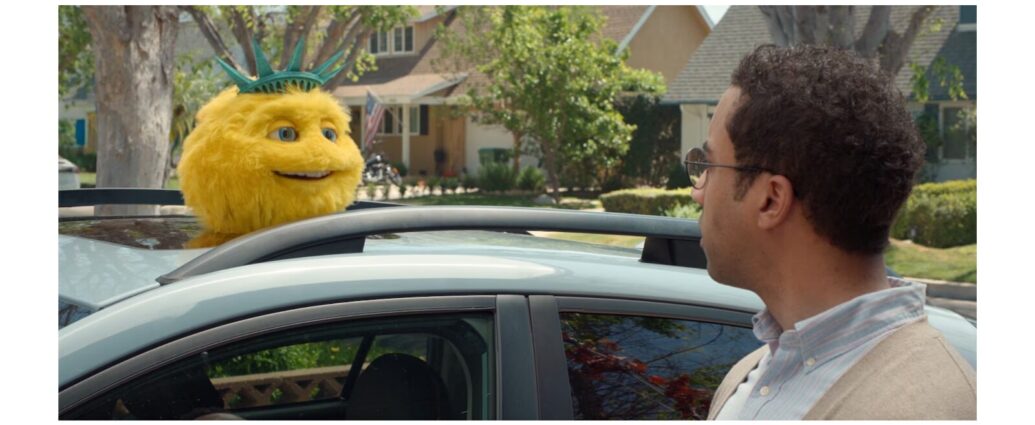
Image courtesy of Liberty Mutual
I need to talk about Liberty Biberty. Not the original commercial where an actor accidentally calls Liberty Mutual “Liberty Biberty.” I’m talking about that fuzzy yellow mascot that seems to be everywhere lately.
I don’t get it. I really don’t.
And before anyone thinks I just hate commercials, I actually love creative advertising. I appreciate brands that take risks, make people laugh, and do something different. As a content creator and strategist, I pay attention to what brands are doing and why.
But this? This feels like a joke that’s now grasping at straws.
The Original Liberty Biberty Joke Made Sense
Back in 2019, Liberty Mutual aired a commercial featuring an actor who couldn’t quite get the company’s name right. Instead of Liberty Mutual, he said “Liberty Biberty.” It was awkward, ridiculous, and funny because it happened within the context of the commercial. It’s actually a great commercial.
I understand why Liberty Mutual wanted to capitalize on that moment. When something in your advertising becomes recognizable, there’s an opportunity to build on it. But there’s a difference between leaning into a funny moment and stretching it into something that doesn’t make sense anymore.
Which brings me to the puppet.
Why Does Liberty Biberty Need to Be a Fuzzy Yellow Mascot?
In July 2026, Liberty Mutual introduced a new mascot inspired by that original joke. Why did they wait six years? I do not know. The fuzzy yellow character was created by Jim Henson’s Creature Shop and was intended to represent the warm, fuzzy feeling of having good insurance coverage at a great price.
Okay. But why?
What does a fuzzy yellow puppet have to do with car insurance? And listen, I have nothing against Muppets. I love a good puppet character when it makes sense. This isn’t about disliking that kind of humor. It’s about creating a character that feels completely disconnected from what you’re selling.
The original Liberty Biberty joke had context. An actor couldn’t say the company’s name correctly. That was the joke. Now we’re watching a fuzzy yellow character sell insurance, and I’m supposed to find that connection clever? I don’t.
Apparently, I’m Not the Only One Who Finds Liberty Biberty Annoying
As it turns out, quite a few people have strong opinions about this mascot. According to Business Insider, a Facebook group called “Liberty Biberty Hate” has attracted more than 40,000 members. People have also criticized the character on TikTok and Reddit. And in October 2026, people actually gathered outside Liberty Mutual’s Boston headquarters to protest the mascot.
Yes. An actual protest over an insurance puppet.
Fast Company covered the backlash, while UPI reported that some protesters considered the campaign annoying, repetitive, and creatively lazy. Obviously, some of the outrage is meant to be funny. And I’m sure there are people who genuinely enjoy the character. But I think the criticism raises a legitimate marketing question.
Just because people are talking about your advertising, does that mean it’s working?
Getting Attention Is One Thing. Getting Customers Is Another.
This is probably my biggest issue with the whole campaign. Liberty Mutual has certainly gotten people talking. The mascot is recognizable, people are sharing videos, and now there are news articles about how much people dislike it.
From a visibility standpoint, that’s impressive.
But getting eyes on your business and getting people to actually purchase your product are two entirely different things. You can have millions of views, thousands of comments, and a commercial everyone remembers. But if those people aren’t becoming customers, what exactly did all that attention accomplish?
Now, I’m not saying Liberty Mutual isn’t selling insurance because of this mascot. We don’t have the sales data to make that claim. In fact, Liberty Mutual told Business Insider that early independent testing showed above-average results for attention and brand attribution.
But attention and brand recognition aren’t the same as customer conversions. And as someone who helps businesses create searchable content that actually brings people to their websites, I think that distinction matters. Visibility is important. Absolutely. But visibility should lead somewhere.
If people remember your mascot but have no greater interest in your product, is that really the win you’re hoping for?
Sometimes a Funny Moment Should Just Stay a Funny Moment
Here’s what makes this even more frustrating to me. I don’t dislike Liberty Mutual’s other commercials. I don’t even dislike the original Liberty Biberty concept. I just think they could have done so much more with that original actor and the funny word mishap.
Bring him back. Create new awkward situations. Let him keep getting things wrong. There was already a recognizable concept to work with. Instead, they introduced an entirely new character around a punchline that didn’t need one. And I think there’s a lesson here for creators and business owners.
Not every viral moment needs to become a series. Not every funny idea needs a mascot. And not everything that gets attention deserves an entire marketing campaign. Sometimes knowing when to stop is just as important as knowing when to capitalize on an opportunity.
Maybe Liberty Mutual will prove me wrong. Maybe that fuzzy yellow mascot will become a wildly successful advertising character. But for now, I still think Liberty Biberty was a funny mishap worth building on.
I just don’t think it needed fur.
What do you think? Is Liberty Biberty funny, or has Liberty Mutual taken this joke a little too far?
Your Morning Coffee Just Got More Interesting. ☕
Marketing decisions, creator news, internet culture, and the occasional commercial that makes us wonder what a brand was thinking. That’s the kind of stuff we talk about in The Daily Pour, my free weekday newsletter. Five quick reads, including useful content and traffic tips, delivered with your morning coffee in mind.
What is Liberty Biberty?
FAQ
Liberty Biberty is a fuzzy yellow advertising mascot introduced by Liberty Mutual in July 2026. The character was inspired by a 2019 commercial in which an actor mispronounced the company’s name.
Why did Liberty Mutual create the Liberty Biberty mascot?
Liberty Mutual wanted to capitalize on the recognition of the original Liberty Biberty joke. The company describes the character as representing the positive feeling of having good insurance coverage at a great price.
Why do people dislike the Liberty Biberty mascot?
Some viewers find the character annoying, repetitive, or disconnected from the insurance product. The criticism has generated social media discussions, a Facebook group with tens of thousands of members, and a humorous protest in Boston.
Is the Liberty Biberty advertising campaign successful?
Liberty Mutual has reported encouraging early results for attention and brand recognition. However, publicly reported results don’t establish whether the mascot has increased insurance purchases or customer conversions.