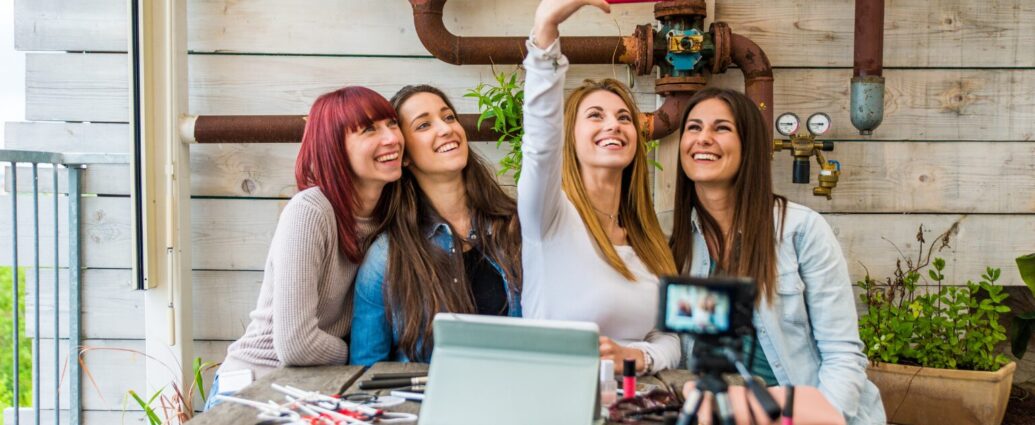
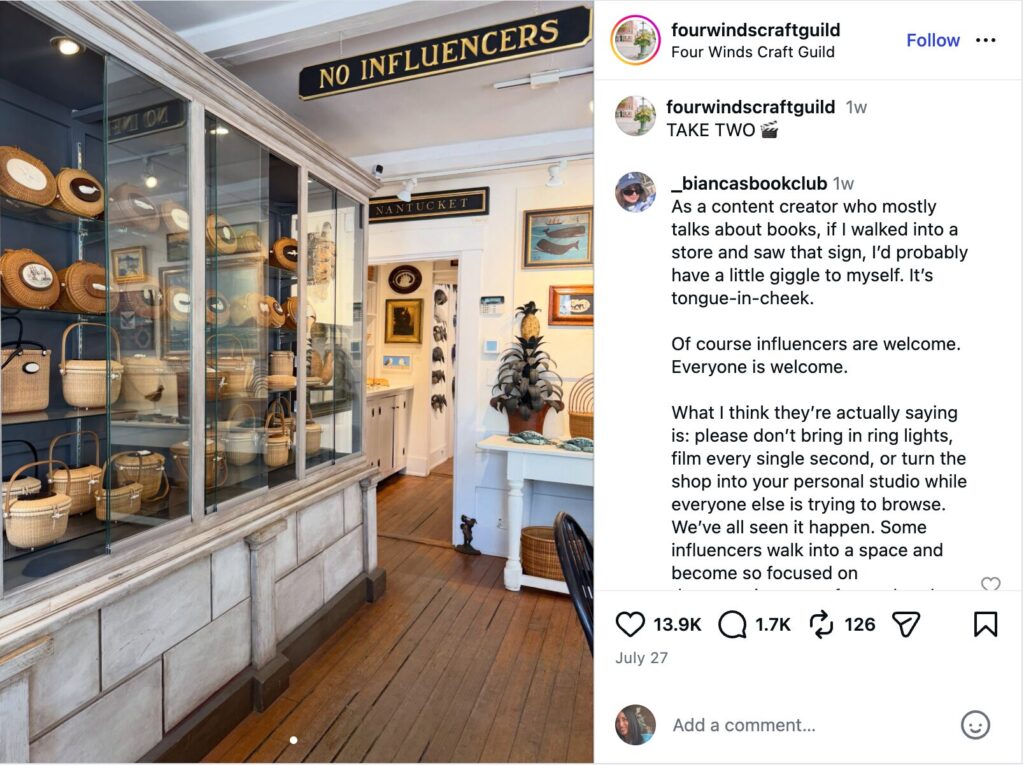
A simple sign outside a small shop in Nantucket sparked one of the biggest conversations in the creator world this summer.
The sign read, “No Influencers.” Almost immediately, it spread across social media, prompting strong reactions from creators, business owners, and customers alike. Some creators argued the sign unfairly reinforced negative stereotypes about influencers, particularly women who create content professionally. The shop owner later explained that the message wasn’t directed at women or creators as a whole, but at visitors who became so focused on filming content that they disrupted the experience for other customers. Whether you agreed with the sign or not, it started an important conversation about the reputation of the creator economy.
As I watched the discussion unfold, I found myself thinking less about the sign itself and more about what it reveals. I think this story says something much bigger than whether influencers should be welcome in one particular store.
The Creator Economy Is Growing Up
The creator economy has changed dramatically over the last few years. What started as people sharing photos and videos online has evolved into a legitimate industry. Businesses hire creators to launch products, educate customers, build communities, and generate sales. Many creators are running successful businesses, supporting their families, and providing genuine value through the content they produce.
At the same time, public perception hasn’t always kept pace with that reality. For some people, the word influencer still brings to mind someone who’s more interested in filming the perfect video than being present in the moment. Whether that stereotype is fair or not, it exists, and I think it’s worth acknowledging.
Every Creator Represents the Industry
One thing I’ve learned over the years is that our actions shape how people view our profession. If one photographer behaves unprofessionally at a wedding, it affects how people think about photographers. If one marketer makes unrealistic promises, it impacts trust in the marketing industry. The same is true for creators. Every respectful interaction, every transparent partnership, and every thoughtful collaboration helps build credibility, not just for ourselves, but for the creator community as a whole.
That’s why professionalism matters so much. It isn’t just about protecting your personal brand. It’s about contributing to the reputation of an entire industry.
Professionalism Is Part of Great Content
I don’t think being a great creator is only about making beautiful videos or writing compelling captions. It’s also about knowing when to put the camera down.
If you’re creating content inside someone else’s business, ask permission whenever appropriate. Be mindful of employees who are trying to do their jobs and customers who may not want to appear in your content. If you’re working with a brand, disclose the partnership clearly. Small decisions like these communicate respect, and respect has a way of building trust over time.
Ironically, I think those habits make your content stronger. People can tell when a creator genuinely cares about the experience of everyone involved.
Build a Reputation You’re Proud Of
One of the reasons I love the creator economy is that it gives ordinary people an opportunity to build extraordinary businesses. But with that opportunity comes responsibility.
The creators who will thrive over the next decade won’t just be the ones with the biggest audiences. They’ll be the ones people trust. They’ll be known for their integrity, professionalism, and ability to create content that serves both their audience and the businesses they work with.
That’s the kind of creator I want to be. And honestly, I think that’s the kind of creator most of us want to support.
Final Thoughts
Whether you agreed with the “No Influencers” sign or thought it missed the mark, I think it accomplished one thing: it started a conversation worth having.
As creators, we have an opportunity to shape the reputation of this industry every time we publish a post, work with a brand, or walk into a local business with a camera in hand. Let’s be known for creating content that is thoughtful, respectful, transparent, and genuinely helpful.
I think that’s how we change the conversation.
Keep Growing With Me
If you’re passionate about creating content with purpose, staying up to date on social media news, and building a business that’s both trustworthy and searchable, I’d love to invite you to join The Daily Pour. Every edition is filled with thoughtful marketing insights, creator news, and practical strategies you can apply to your business. It’s free, encouraging, and designed to help you create something worth remembering.
FAQ Section
What was the “No Influencers” controversy?
A shop in Nantucket drew national attention after displaying a “No Influencers” sign. The incident sparked debate about creator behavior, public perceptions of influencers, and how businesses and creators can respectfully share public spaces.
Why do some businesses have concerns about influencers?
Some business owners have expressed concerns about creators disrupting customer experiences, occupying spaces for extended periods, or filming without permission. At the same time, many businesses actively welcome creators and partner with them to reach new audiences.
How can creators work professionally with businesses?
Creators can build trust by asking permission when appropriate, respecting employees and customers, clearly disclosing partnerships, and creating content that adds value rather than disrupting the environment.
Why does professionalism matter in the creator economy?
Professionalism helps build long-term trust with brands, audiences, and other businesses. As the creator economy grows, respectful and transparent creators are more likely to develop lasting partnerships and strong reputations.